

Ajman Real Estate and the US-Israel-Iran Conflict: Crisis Comes and Goes and Why UAE Real Estate Stays Strong
On February 28, 2026, the Middle East changed overnight. US and Israeli forces launched coordinated strikes on Iran, killing Supreme Leader Khamenei,...
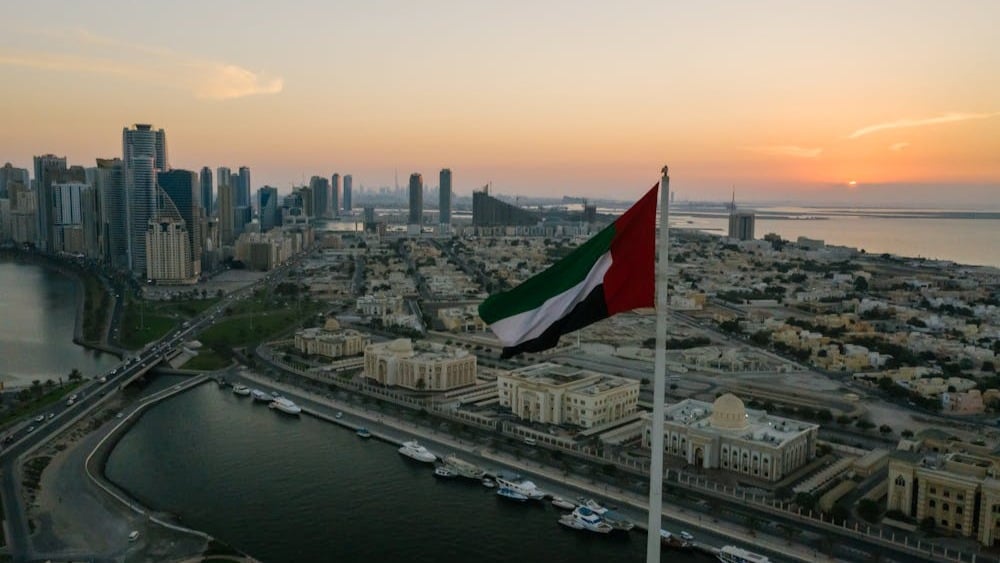
On February 28, 2026, the Middle East changed overnight. US and Israeli forces launched coordinated strikes on Iran, killing Supreme Leader Khamenei, destroying nuclear sites, and dismantling key military infrastructure. Iran hit back fast. Missiles. Drones. Hundreds of them. The Gulf, which had spent two decades selling itself as a zone of calm, suddenly looked anything but.
Due to the impact of this war, Dubai International Airport shut down. Over 3,400 flights were cancelled in a single day. Emaar stock fell more than 25%. Over $120 billion was wiped from UAE markets in weeks.
The world watched Dubai. News channels ran dramatic headlines. Investors started asking questions — is Ajman safe from Iran? What does this mean for UAE real estate news today? Should I buy or wait?
While Dubai grabbed the attention, Ajman's real estate market was doing what it always does. Staying steady. Growing quietly. And becoming more attractive by the week. Whether you are looking to buy property in Ajman or explore rental options in Ajman, the fundamentals here tell a very different story from the headlines.
This article breaks down what actually happened, what the data says, and why Ajman real estate is one of the most compelling investment stories in the UAE right now, even as the conflict continues.
What Actually Happened to UAE Real Estate When the War Started

If you have been following UAE real estate news today, the impact of the Iran-Israel war on UAE real estate has been the dominant story for weeks. And the numbers are real.
Dubai's real estate index dropped 16% from the day the war began. Goldman Sachs estimated that property transactions were down 37% year-on-year by late March. The Dubai property market analysis coming out of major banks tells a consistent story — sales compared to February 2026 fell by more than 50%. Some sellers in a hurry accepted discounts of 10 to 15 percent just to exit fast.
Developer stocks took a hammering. Emaar, the company behind the Burj Khalifa, lost over 25% of its value. UAE corporate bonds became the worst-performing asset class in emerging markets. Bloomberg called it a threat to an "abrupt end" of the UAE real estate bond boom that had been building for years.
The human side was also visible.
By any short-term measure, the war hit UAE real estate hard.
But here is the part that matters for investors — this is not the first time. Not even close.
Dubai Has Survived This Before — Every Single Time
People forget that Dubai has been through worse. The 2009 global crash wiped 50% off Dubai property prices. Not 16%. Fifty percent. And that market recovered fully by 2013, then went on to hit all-time highs by 2025.
The Arab Spring in 2010 and 2011 sent shockwaves through Egypt, Libya, Tunisia, and Syria. What happened in Dubai? Wealthy Arab families moved their money there. Palm Jumeirah and Downtown Dubai held their values. Capital flowed in, not out.
The Russia-Ukraine war in 2022 created a wave of Russian and Ukrainian buyers who had nowhere else to put their money. Prime areas in Dubai surged 44% during that period. Russian buyers became the largest luxury investor group in the city almost overnight.
Every single time regional chaos erupted, Dubai became the landing pad for capital looking for safety.
The Iran war of 2026 is following the same script. For anyone doing a proper Dubai property market analysis right now, the pattern is clear — the Dubai real estate market after war does not collapse. It resets, then climbs.
Experienced investors are calling this the "motivated seller phase." History shows that after this phase comes recovery, then growth, and eventually new highs. This pattern has repeated after every crisis in the last 25 years.
So, Where Does Ajman Fit In All This?
While all eyes were on Dubai, Ajman was quietly doing something important. It was not seeing the same panic.
This is a question a lot of people are asking right now: is Ajman safe from Iran? The answer, based on geography and what actually happened, is yes. Ajman was not targeted. The Northern Emirates did not experience the same direct security pressure that Dubai and Abu Dhabi faced.
But beyond physical safety, Ajman's real estate story is structurally different from Dubai's in ways that matter even more for investors.
Ajman does not depend on luxury tourism or five-star hotel bookings. It does not have a skyline full of off-plan penthouse projects bought by foreign speculators. The bulk of its market is made up of end-users — families, professionals, and residents who live and work in the Northern Emirates.
Those people did not leave.
Ajman's market is driven by real housing demand. People need places to live. The emirate's population has grown from around 524,000 in 2018 to about 574,000 in 2023. It is expected to reach 651,000 by 2030. That growth does not stop because of geopolitical tension.
Household sizes are also shrinking — from an average of 4.18 people per household in 2017 down to a projected 3.3 by 2030. Smaller households mean more units needed. More units needed means more demand. It is basic maths.
Ajman's Numbers Are Hard to Ignore
Here is what Colliers found in their research on Ajman — published before the conflict, based on fundamentals. Our own Ajman Real Estate Market Report for January 2026 paints the same picture on the ground.
Ajman's real estate market has grown at a steady 6% per year since 2018. Not a boom. Not a bubble. Consistent, structural growth.
The emirate's GDP grew 20% between 2020 and 2023, reaching AED 36 billion. That is not oil money. That is an economy diversifying and expanding.
The Affordability Advantage: Why Ajman Keeps Attracting Buyers
Dubai got expensive. Very expensive.
Dubai property values rose 60% and reached AED 1,818/sq. ft. in 2026. Are Dubai property prices falling due to the war? Slightly, yes — and a correction was already coming before the first missile was ever launched. Fitch predicted it. UBS flagged bubble risk as early as late 2024. The war accelerated what was already in motion.
That kind of growth is impressive if you already own. It is a barrier if you are trying to buy in.
So where did buyers go? First Sharjah. Then, as Sharjah prices followed Dubai upward, Ajman.
Ajman sits just 40 kilometres from Dubai. Most of the emirate's residents work in Dubai or Sharjah and commute. The infrastructure — roads, facilities, services — has improved significantly. And yet prices remain a fraction of what they are in neighbouring emirates.
For a first-time buyer, a young family, or a mid-income investor looking for rental yield without a Dubai price tag, Ajman makes sense in a way no headline can diminish.
Colliers put it directly: Ajman is "rapidly evolving into a serious player in the UAE's real estate market" with a "strategic and increasingly attractive" position.
That was written before the war. The war has not changed any of those fundamentals.
Who Is Still Buying in Ajman Right Now?
Not everyone paused when the missiles started flying.
Indian buyers — who represent around 20 to 22% of all foreign property transactions across the UAE — adopted a "wait-and-see" approach in Dubai's luxury market. But in affordable segments like Ajman, activity continued. Indian buyers in Ajman are typically end-users or mid-market investors. The conflict changed their sentiment slightly, but not their underlying need for housing.
Pakistani buyers behaved similarly. Both communities have large populations in the Northern Emirates. They are not buying speculative penthouses on Palm Jumeirah. They are buying homes.
GCC buyers have not panicked. UAE nationals and regional Arab investors understand this landscape better than foreign observers do. They have seen the pattern before.
And then there is a newer trend — geographic hedging. Some investors who previously put everything into Dubai are now actively spreading risk across multiple emirates. Ajman benefits directly from this.
Short-Term Pain vs. Long-Term Reality
Let's separate what is temporary from what is structural.
Temporary: the sentiment shock. Paused buyers. Some discounted exits. Lower transaction volumes in March and April 2026. Negative headlines.
Structural: none of the above.
Ajman's population is still growing. Its housing deficit is still expanding. Its government is still implementing the policies that drove 102% transaction growth last December. The UAE dirham is still pegged to the US dollar. There are still no income taxes on rental earnings. Golden Visa thresholds are still in place.
Fitch Ratings, back in early 2025, predicted a correction of up to 15% in Dubai in 2025 and 2026. Some of that correction has already happened — accelerated by the war. For long-term investors, a correction that was expected anyway, now arriving slightly faster than forecast, is not a disaster. It is a reset.
Citi now projects UAE population growth of around 2% annually through 2031. That is slower than the recent 4% trend, but still growth. Still demand. Still people who need places to live.
The question is not whether the UAE market will recover. Based on every crisis of the past 25 years, it will. The question is whether you are positioned before or after that happens.
Ajman vs. Dubai vs. Sharjah: Where Is the Value Right Now?
Every market serves a different buyer.
Dubai is a world-class city with world-class prices. Rental yields run 6 to 9% in good areas — significantly better than London (2.8%), Singapore (3.5%), or Hong Kong (2.2%). For high-net-worth buyers who want the brand and can absorb short-term volatility, Dubai still makes sense. The Dubai property rental market in particular remains resilient — tenants do not disappear overnight the way buyers do.
Sharjah sits between Dubai and Ajman on the price spectrum. It has improved significantly over the past decade and attracts buyers who want proximity to Dubai without Dubai prices. But Sharjah prices have risen sharply. The affordability gap that once defined it has narrowed.
Ajman is the clearest value proposition right now. Lower entry price. Consistent 6% annual growth. Strong rental demand from a population that is not going anywhere. Infrastructure that keeps improving.
For investors focused on return on investment over speculation, Ajman consistently delivers.
Dubai Property Market Forecast: What Happens After the Conflict Ends?

Historical recovery timelines show that UAE transaction volumes typically return to pre-crisis levels within 6 to 18 months after a geopolitical shock. The Dubai property market forecast from most analysts — even those who acknowledge the war's real damage — recovery points, not collapse.
When that happens in the current cycle, several things are likely to follow.
The luxury segment in Dubai will see renewed demand from international buyers who sat on the sidelines. Some of that pent-up demand will be significant — buyers who had deals in progress when the war started and simply paused. They will return.
Mid-market and affordable segments in Ajman and the Northern Emirates will benefit from a new wave of residents relocating from Dubai. Expats who experienced the vulnerability of living near an international airport that shut down in a crisis may reconsider where they want to live long-term.
New supply that was coming to market across the UAE will be absorbed more slowly than developers initially hoped. This actually supports prices in secondary markets like Ajman, where the supply pipeline is far less saturated than Dubai.
The UAE's diplomatic position — maintaining working relationships with both Israel and Iran, refusing to be drawn into open alignment with either side — is a deliberate strategy. It is designed to ensure that Dubai and the broader UAE remains commercially accessible to investors and residents of every nationality. That strategy has not changed. It is still working.
How to Invest in Ajman Real Estate Right Now
If you are looking at Ajman, here are the practical points to know.
Key areas worth watching include Al Nuaimiya, Al Rashidiya, Ajman Corniche developments, and the newer waterfront communities being developed on the Gulf coast. Each offers different price points and demand profiles.
Off-plan vs. ready properties is a genuine decision. Off-plan gives you a lower entry price and the potential for capital appreciation by handover. Ready properties give you immediate rental income. In a period of uncertainty, ready properties with sitting tenants carry less risk.
Foreign ownership is fully permitted in designated freehold zones in Ajman. The registration process through the Ajman Department of Land and Real Estate Regulation is transparent and efficient. You get a proper title deed.
Rental yields in Ajman consistently outperform Sharjah and are competitive with many Dubai areas — at significantly lower entry prices. That combination is rare anywhere in the world.
Golden Visa eligibility starts at AED 2 million for property purchases across UAE freehold zones. Some projects in Ajman now qualify. For buyers who see property as a vehicle for residency, this matters.
Payment plans from developers remain flexible. Low down payments, post-handover instalments, and staged payment structures mean you do not need to deploy all your capital at once.
The Bigger Picture: Why UAE Real Estate Keeps Getting Back Up
There is a reason global investors — through war, pandemic, financial crisis, and regional instability — keep returning to the UAE.
It is not just the weather. It is not just the lifestyle.
It is the combination of zero income tax on rental earnings, a currency that does not fluctuate against the dollar, freehold ownership laws that protect foreign buyers, a government that has consistently invested in infrastructure and growth, and a location that sits at the intersection of East-West trade, finance, and travel.
None of those things have changed because of the Iran war.
The Burj Al Arab got some debris on it. Dubai's stock market closed for two sessions. Some expats left. Headlines screamed collapse.
But the structural case for UAE real estate — and specifically for Ajman's growing, affordable, fundamentals-driven market — remains exactly what it was on February 27, 2026.
Crises come and go. They always have. The UAE has absorbed them all.
Ajman's time is now.
Final Thoughts: What Should You Do?
If you are a long-term investor with patience and a clear strategy, this moment looks more like an entry window than a warning signal.
Distressed sellers are offering prices that were not available 12 months ago and will likely not be available 12 months from now. Competition from other buyers has temporarily reduced. Developers are offering more flexible payment terms to keep sales moving.
If you are a first-time buyer who needs to live in the Northern Emirates and has been waiting for the right moment, the market is giving you a window that rarely opens.
If you are purely speculative and need short-term returns, this is genuinely not the right moment. Sit it out.
For everyone else — the residents, the long-term investors, the people building wealth in the UAE — Ajman real estate in 2026 represents exactly the kind of opportunity that history says you should not miss.
The crisis will pass. The fundamentals will remain.
They always do.
Frequently Asked Questions
Q: Is Ajman safe from Iran?
Yes. Ajman was not targeted. The strikes hit Dubai and Abu Dhabi. Life in the Northern Emirates continued normally throughout the conflict.
Q: Did the Iran war affect Ajman property prices?
Not significantly. Ajman's buyers are mostly residents and end-users. They don't leave because of geopolitical news — and neither does their demand for housing.
Q: Is it still a good time to buy property in Ajman in 2026?
Yes. The fundamentals haven't changed. Prices are still affordable, demand is still growing, and the conflict has created a motivated seller window that rarely opens.
Ali Ahmad
Ali Ahmad is a licensed property consultant at IM Properties LLC, Ajman. With 3 years in Ajman's real estate market, he helps buyers and families find the right home by matching properties with lifestyle needs — from school proximity and daily commute to neighborhood dining and community feel. He has facilitated 100+ property transactions across Al Rashidiya, Ajman Downtown, and Emirates City. Ali writes about market trends, investment strategies, and the neighborhoods that make Ajman one of the UAE's most livable emirates.
You Might Also Like


Stay Updated with Market Insights
Get exclusive real estate market analysis, investment opportunities, and expert tips delivered straight to your inbox every week.
Trusted by 850+ customers · ★★★★★ 4.9/5 average rating