

Understanding the Memorandum of Understanding (MOU) in Dubai Real Estate Transactions
Navigating Dubai’s real estate market involves understanding various essential documents, including the Memorandum of Understanding (MOU). This docume...

Navigating Dubai’s real estate market involves understanding various essential documents, including the Memorandum of Understanding (MOU). This document is crucial as it outlines the terms and conditions the buyer and seller agreed upon before the final sale. Understanding how the MOU works helps safeguard both parties’ interests, streamlining the property transaction, and ensuring legal compliance. In this guide, we’ll explore what an MOU is, why it’s important, and what steps to follow to complete one successfully within Dubai’s real estate framework.
While Dubai's real estate transactions receive most of the attention, property buyers and investors increasingly work across multiple emirates, including Ajman where similar documentation principles apply with emirate-specific regulations. Understanding MOU mechanics in Dubai provides foundational knowledge applicable when buying property in Ajman, where ARRA (Ajman Real Estate Regulatory Agency) governs transactions instead of RERA.
For investors building portfolio, recognizing how preliminary agreements protect both parties across different regulatory frameworks becomes essential. Whether you're managing single properties or extensive portfolios, professional property management services understand the documentation requirements specific to each emirate, ensuring compliance with both RERA and ARRA regulations throughout the transaction process.
What is an MOU in Dubai Real Estate?
In Dubai, an MOU, or Memorandum of Understanding, serves as an initial, legally binding document between the buyer and seller of a property. Often referred to as Form F in Dubai, the MOU is issued by the Real Estate Regulatory Authority (RERA) and must be signed by all stakeholders involved in the transaction. This document clarifies the terms of the sale, including the agreed purchase price, payment schedule, and each party’s responsibilities, laying the foundation for a smooth real estate transaction.[caption id="attachment_12429" align="aligncenter" width="563"]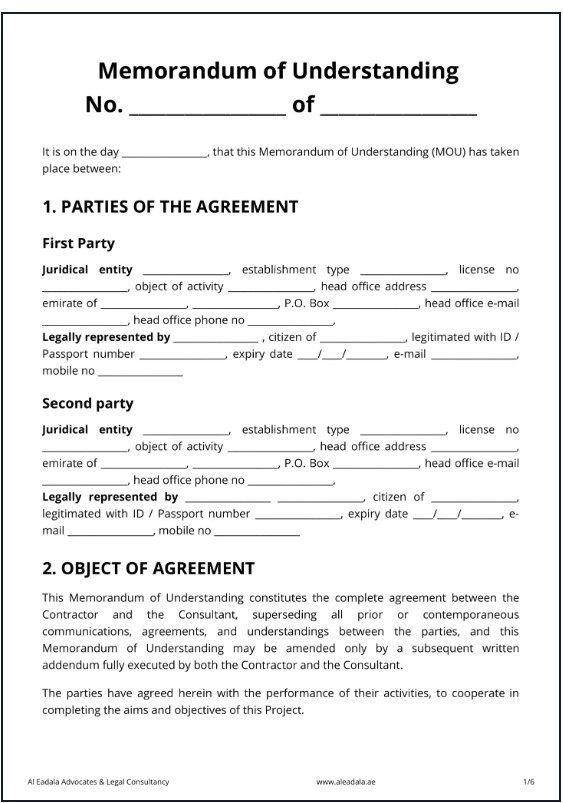 a template of MOU in Dubai real estate (image credit: aleadala.ae)[/caption]Form F ensures that both the buyer and seller commit to the transaction terms before proceeding with the title transfer. Additionally, it specifies a 30-day deadline for both parties to complete all necessary documentation. If this deadline is missed, the MOU (Form F) becomes void, and a new agreement must be created for the transaction to proceed. For more on RERA’s role in overseeing real estate compliance, refer to our RERA Dubai Property Guide.
Why is an MOU Important in Dubai Real Estate?
The MOU plays a vital role in establishing transparency, security, and mutual commitment between both parties in Dubai’s real estate transactions. It ensures that all essential terms, including payment structure, timelines, and any specific conditions, are clearly outlined and agreed upon. This document protects both parties by formalizing the agreement and reducing the likelihood of misunderstandings or disputes later on.The requirement to sign Form F within the specified 30-day period also adds urgency and accountability, encouraging timely action from both the buyer and the seller. In the case of resale property purchases, the MOU formalizes unique details that may differ from buying new properties. For a guide on purchasing resale properties, visit our Resale Property Guide.
Key Components of an MOU (Form F) in Dubai Real Estate
The MOU document includes various sections to ensure both parties responsibilities and expectations are clear:
- Parties of the Agreement: Specifies the details of each party, including their legal identity, license information, and contact details.
- Object of Agreement: Defines the purpose and commitment of both parties, specifying that this document supersedes prior agreements and communications.
- Payment Terms and Deposit: Lays out the payment structure, any non-refundable deposits, and deadlines for each milestone.
- Documentation Deadline: Stipulates that both parties have 30 days to complete the required documentation. Failing to meet this deadline renders the MOU void, necessitating a new agreement.
- Legal Obligations: Establishes each party’s legal commitments, including penalties for failing to meet the agreed terms.
- Amendment Provision: States that changes to the MOU must be made through a mutually agreed-upon written addendum.
By following these components, the MOU ensures clarity, transparency, and legal protection for both buyers and sellers in Dubai’s real estate market.
Benefits of Using an MOU in Dubai Real Estate Transactions
The MOU offers several advantages to both parties involved in the transaction:
- Legal Assurance: As a binding document, the MOU confirms each party’s commitment, minimizing the risk of withdrawal.
- Structured Deadlines: The 30-day documentation requirement ensures a timely transaction, keeping both parties on track.
- Enhanced Transparency: By including regulatory components such as RERA’s Form F, the transaction is protected under Dubai’s laws, enhancing compliance.
- Reduced Disputes: A clearly defined agreement reduces the potential for misunderstandings, ensuring a smoother transaction process.
- Financial Security: Deposits within the MOU provide a safeguard, giving sellers confidence that the buyer is serious about the purchase.
- Smoother Process: Clear terms and deadlines streamline the process from initial agreement to final title transfer, ensuring a seamless experience.
If you’re considering affordable property investments in the UAE, you can view affordable properties and reach improperties for affordable property listings in UAE.
How to Complete an MOU (Form F) in Dubai Real Estate
To complete the MOU, both parties must agree on all terms, such as the sale price, payment terms, and any specific conditions. The process is generally facilitated by a licensed real estate agent, who ensures compliance with RERA’s requirements. Both the buyer and seller sign Form F, after which they have 30 days to submit all required documentation to move forward with the property transfer.
FAQs
What is an MOU in Dubai?
An MOU, often referred to as Form F in Dubai, is a binding preliminary document signed by the buyer and seller in a real estate transaction. Issued by RERA, it outlines key terms such as price, payment schedule, and legal obligations.What is an MOU agreement for?
The MOU or Form F serves to establish mutual understanding and formalize the terms of a real estate transaction. It provides security, ensures transparency, and clarifies each party's responsibilities before the final sale.How to get a Memorandum of Association in Dubai?
To obtain an MOA, consult a legal advisor or real estate agent who can draft the document per Dubai’s real estate laws. For property transactions, the MOA is typically prepared with the assistance of a licensed real estate broker and submitted to the DLD for approval.
For additional information on buying property in Dubai, refer to our Buyer’s Guide for a step-by-step overview.
Take the Next Step
Benefit from our team's expertise in real estate and mortgage processes. Contact us or register on our website to explore your options and start your real estate journey with confidence. With the right knowledge and guidance, you’ll be well-prepared to navigate Dubai’s real estate market and secure your ideal property.
Our team at IM Properties is ready to help you find the right property in the right area, from Al Nuaimiya to the Corniche. Learn more about why Ajman is becoming one of the smartest property investments in the UAE in 2026, or get in touch with us directly to start your journey.
Tayyaba Shahzadi
Tayyaba Shahzadi is a content specialist at IM Properties LLC with 4 years of experience covering Ajman's property market and community landscape. A long-time UAE resident, she combines on-the-ground knowledge of Ajman's neighborhoods with in-depth research on property regulations, market trends, and investment opportunities. She writes to help home seekers, investors, and new residents navigate both the real estate process and daily life in Ajman.
You Might Also Like



Stay Updated with Market Insights
Get exclusive real estate market analysis, investment opportunities, and expert tips delivered straight to your inbox every week.
Trusted by 850+ customers · ★★★★★ 4.9/5 average rating